





Introduction: Hands and Glaze — losing yourself in an Amalfi Coast workshop
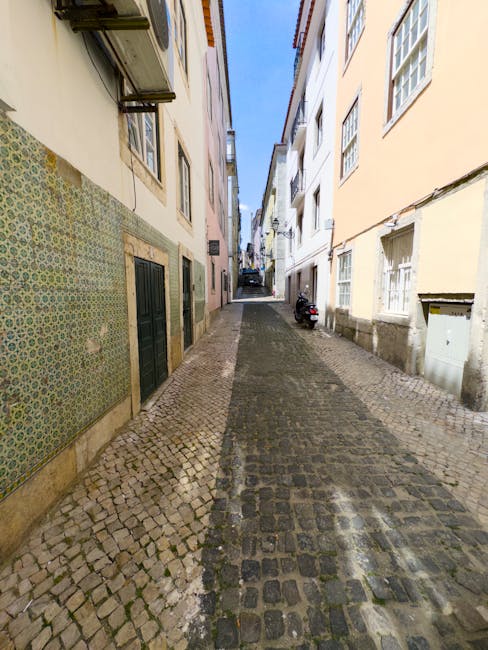
On the Amalfi Coast, cliffs plunge straight into a sea so deep blue you’d think it had been used to mix pigments. Between terraced villages, oversized lemons dangle like yellow lanterns and stairways sometimes open onto tiny workshops where hands have been shaping clay for generations. “Hands and glaze” isn’t just a poetic phrase here — it’s a lived reality, the daily encounter between human touch and material that has shaped the region’s visual identity: painted tiles, ornate plates, decorative jars and colorful mosaics that adorn facades and kitchens.
Ceramics from the Amalfi Coast, while often associated with the nearby town of Vietri sul Mare, can be found in many lesser-known workshops across Amalfi, Ravello, Minori, Maiori and Positano. Each studio has its own story: sometimes a family dynasty launched after World War II, sometimes a master potter trained in Florence who returned home, sometimes a young ceramicist reinventing arabesque patterns with a contemporary twist. In this piece, I invite you to run your hand across the glaze, to listen to the wheel’s breath, to watch pigments being thinned and brushed, and to meet the makers. We’ll cover where to go, when to visit, typical prices for pieces and classes, and how to bring ceramics home intact — practical tips for the curious traveler and the budding collector alike.
You’ll find exact addresses, opening hours, indicative prices for visits and workshops, sensory descriptions of the spaces, and field anecdotes: the smell of wet clay, the oven’s heat, the faint crackle of an aged glaze. We’ll also talk technique: how to hold a fragile piece, how to tell a handmade glaze from industrial production, when it’s appropriate to haggle and when to accept the listed price. The aim isn’t merely touristy — it’s respectful: learn to see the value of craft, support local studios and bring home souvenirs that tell a story.
Whether you’re planning a two-day stay or just passing through between Positano and Ravello, let these portraits guide you. They’re written to help you plan concrete visits, with precise information — postal addresses, prices in euros, opening times — and close-to-the-ground tips: where to park, which bus to take, what time is least crowded to watch a potter at the wheel. Open your senses: sight, touch and smell will tell you more than any guidebook. Now, step into these workshops, feel chamotte dust under your nails and watch glaze go from matte to glossy under a layer of fire.
Vietri sul Mare: the historic capital of ceramics
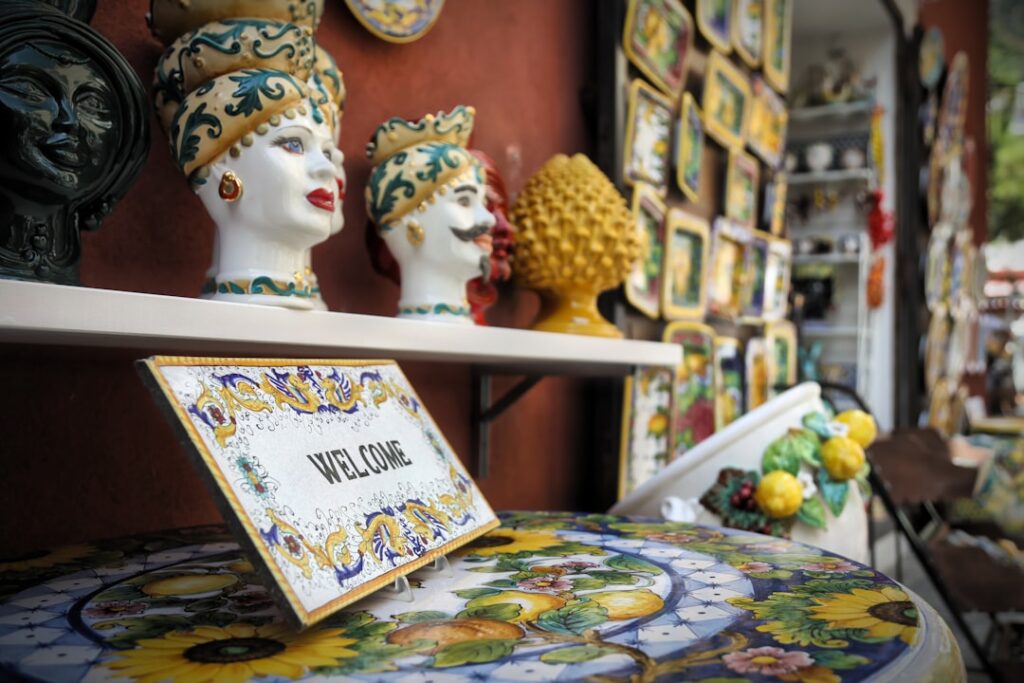
Vietri sul Mare is often seen as the gateway to Amalfi ceramics. Located 12 km east of Amalfi, its narrow streets are lined with shops sporting painted facades and windows filled with oval platters and Medusa heads. Among the historic workshops, two stand out for their longevity and the quality of their output.
La Bottega Ceramiche De Rosa
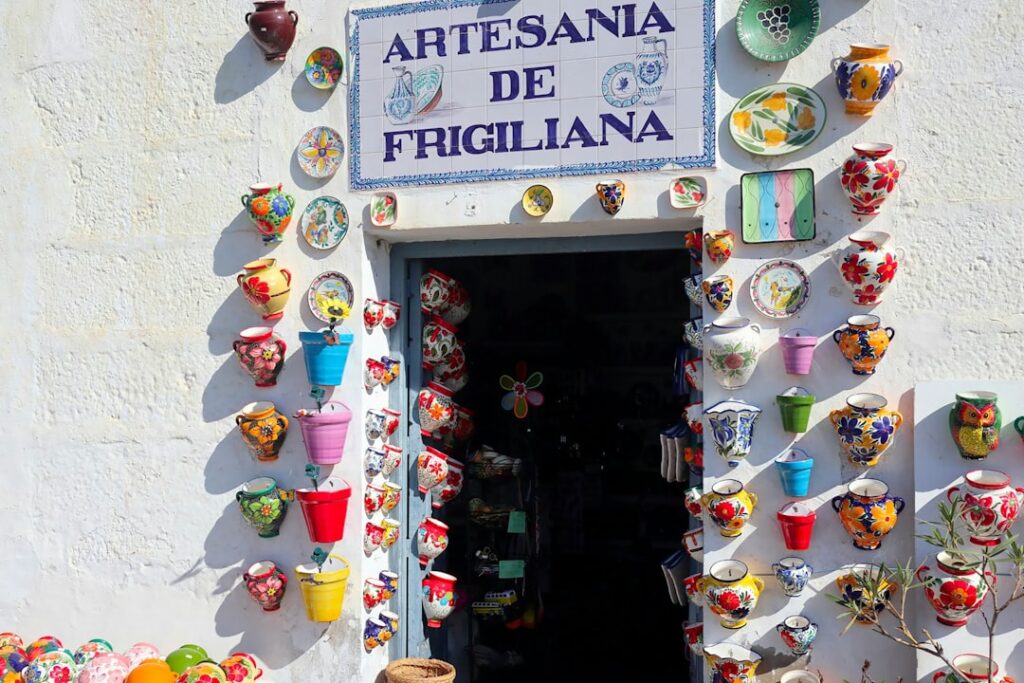
Address: Via Vincenzo Maggio 24, 84019 Vietri sul Mare (SA), Italy. Opening hours: open Tuesday–Sunday 10:00–19:00, closed Monday. Prices: free self-guided visits; introductory workshops (1h30) from €45 per person; entry-level pieces (decorative plates) €35–60. Description: set in an old space overlooking Via Roma, De Rosa showcases a collection of traditional tiles and utilitarian wares. The characteristic smell of clay and an electric kiln tucked into the back give the place a very alive feel. Artisans often work in pairs: one shapes, the other paints.
Practical tips: to avoid crowds, come early (10:00–12:00) or late afternoon after 16:00. Free parking in the center is rare; use the Parcheggio Comunale on Via Matteotti (Parcheggio Comunale Vietri sul Mare), about a 5-minute walk away. If you buy a large piece, ask whether the workshop offers international shipping: most will pack and ship for you, but expect €40–80 depending on volume.
Ceramica Artistica Solimene
Address: Corso Umberto I, 200, 84019 Vietri sul Mare (SA), Italy. Opening hours: Monday–Saturday 09:30–13:00 and 15:30–19:30; Sunday 10:00–13:00. Prices: workshop museum visit €5; signature pieces €120–450; hand-painted tiles on commission from €90 each. Description: the Solimene company, founded in 1940, runs a small museum-like space showing historic pieces, plaques and wall panels. Their glossy glazes and tones of lapis blue and lemon yellow are recognizable at a glance. The studio uses lead-based glazes for glazed decorative pieces (compliant with EU standards when used for decoration).
Practical tips: the museum is compact but rich in photographic archives; it’s ideal for art history enthusiasts. Bring gloves if you want to handle samples (some studios require them). If you’re planning a custom order (panel, kitchen frieze), allow 4–8 weeks production time off-season and longer in high season (May–Sept). Always ask for an invoice and a certificate of origin if you’re buying for resale.
Amalfi and Atrani: small workshops, big pieces
Amalfi and its neighboring village Atrani have a less industrialized ceramic tradition than Vietri, but one that remains faithful to Mediterranean motifs: stylized fish, grape clusters, Moorish arabesques. Workshops here are often smaller, the atmosphere more intimate, and the artisans more available to explain their techniques.
Officina Ceramica Amalfitana — Marco Russo’s Studio
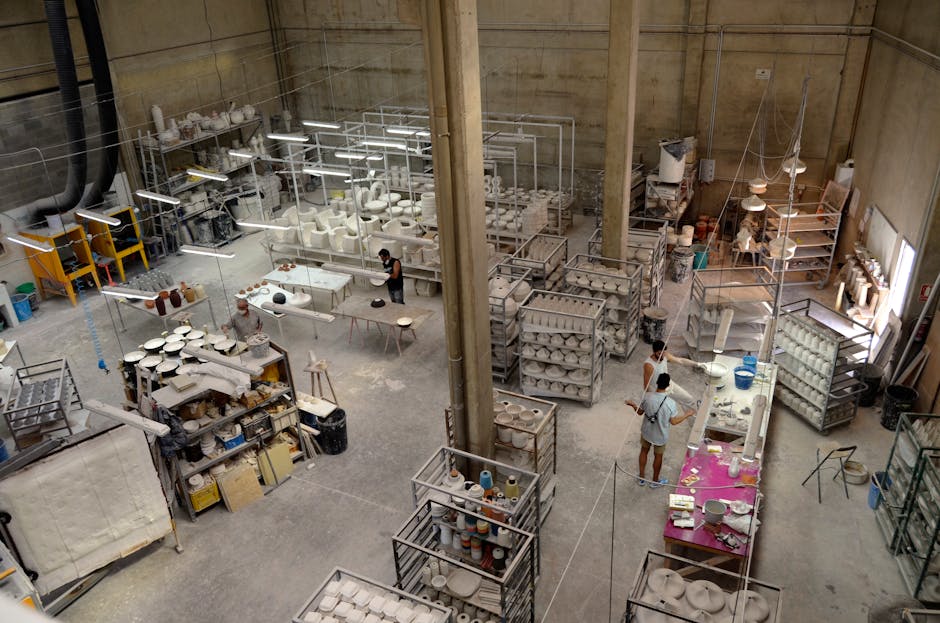
Address: Via Lorenzo D’Amalfi 12, 84011 Amalfi (SA), Italy. Opening hours: open Tuesday–Sunday 10:00–18:30; closed Monday. Prices: individual wheel lesson (2h) €70; half-day workshop €120; decorative plates €40–80. Description: Marco Russo works in a converted warehouse turned into a bright studio, two streets from the Duomo di Amalfi. His style blends tradition and modernity: clean lines, occasional use of 24k gold on rims, and a deliberately crackled glaze for his “vintage” series. You’ll often spot international students trying their hand at the wheel, and Marco takes time to explain the firing cycle from biscuit at 980 °C through glazing and the second firing at 1040–1060 °C.
Practical tips: the studio is about 300 meters from the famous Duomo di Amalfi (Piazza del Duomo, 84011 Amalfi). If you arrive by car, park at Parcheggio Valle dei Mulini (Via del Mare, 84011 Amalfi), roughly a 10-minute walk. Courses should be booked at least 48 hours in advance during high season; Marco sometimes accepts same-day sign-ups if the class isn’t full. Bring clothes you don’t mind getting dirty and closed-toe shoes: drying clay and chamotte dust can be slippery.
Laboratorio di Ceramica di Antonella Ferraro (Atrani)
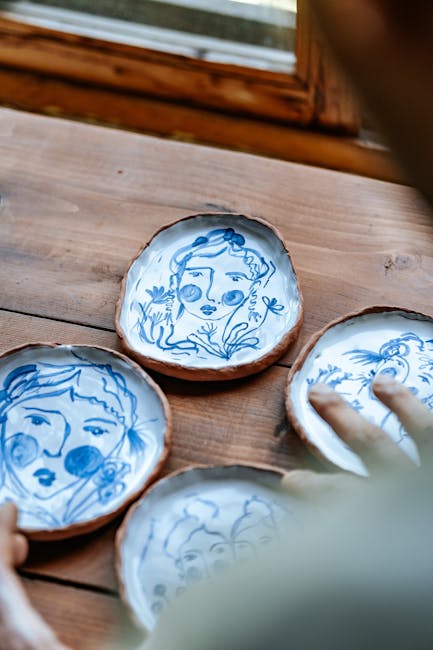
Address: Via Umberto I, 11, 84010 Atrani (SA), Italy. Opening hours: open daily 09:30–13:00 and 16:00–20:00; occasionally closed for local festivals. Prices: small decorative heads €25–45; family workshops (1h) €30 per child, €50 per adult. Description: tucked on a narrow Atrani street, Antonella’s studio is a warm space where tradition shows in hand-painted floral motifs and marine icons. Antonella runs beloved family sessions where kids can shape shell forms out of clay and paint them after the first firing.
Practical tips: Atrani is a 10–15 minute walk from Amalfi via the Via dei Villaggi. The studio is very close to Atrani beach (Spiaggia di Atrani), so you can easily combine a studio visit with a swim. If you’re buying multiple pieces, ask for a progressive discount (for example 10% for three or more items): many artisans offer modest reductions, especially off-season. Traveling with kids? Note that public restrooms aren’t always nearby — plan a stop at a café nearby.
Ravello and Positano: contemporary creativity and bespoke commissions
Ravello, perched above Amalfi, and cliffside Positano attract visitors looking for more contemporary pieces: geometric forms, raw glazes, designer collaborations. Workshops here frequently focus on custom commissions — friezes for private villas, tableware sets for Michelin-starred restaurants, or tile panels for boutique hotels.
Atelier Ceramiche del Belvedere — Ravello
Address: Via San Giovanni del Toro, 8, 84010 Ravello (SA), Italy. Opening hours: open daily 10:00–18:00; closed 25 December and 1 January. Prices: free visits; consultations for commissions from €80 (design fee); decorative panels from €600. Description: just steps from Villa Rufolo (Villa Rufolo, Piazza Vescovado, 84010 Ravello), the studio enjoys panoramic sea views. Artisans produce large wall pieces and limited series. Their mastery of glaze preparation and gas kiln firings creates patinas highly sought after by interior designers.
Practical tips: pair a studio visit with Villa Rufolo (Villa Rufolo, Piazza Vescovado, 84010 Ravello; Villa Rufolo opening hours 09:00–19:00, admission varies by exhibition, generally €7–12). For a custom order, plan an on-site meeting (30–60 minutes) and request a written quote. Most studios require a 30–50% deposit at order; the balance is due before shipping. Always confirm packing and transport arrangements: large slabs typically need container shipping or hand-delivery via a specialized service.
Positano Ceramica Moderna — Studio by Lucia Bianchi
Address: Via Pasitea 204, 84017 Positano (SA), Italy. Opening hours: open daily 09:30–19:30 in summer; reduced hours off-season (10:00–17:00). Prices: cups and bowls €20–55; ceramic lamps €150–380; intensive courses (3 days) €320. Description: Lucia Bianchi converted a sloping space into a studio-shop. Her pieces focus on form and light: pierced lamps that cast patterns on walls, bathroom basins glazed in graduated hues. Glazes used for food-contact wares are lead-free, and Lucia often collaborates with designers on capsule collections.
Practical tips: Positano is very busy in July–August; come early to talk to Lucia before the crowds arrive. The studio is on Via Pasitea, the main pedestrian hill — if mobility is an issue, take a taxi up to the shop. For transporting a lamp or basin, request a wooden crate made by the studio; expect €25–70 depending on size. Also ask about care for matte glazes — some require specific products to avoid water marks.
Practical tips for visiting, buying and shipping ceramics on the Amalfi Coast
Visiting a ceramic workshop on the Amalfi Coast is first and foremost about respecting an artisanal rhythm. Here are concrete, tried-and-true recommendations to make the most of your experience.
- Best time to visit: April–June and September–October offer pleasant temperatures and fewer tourists. In July–August, workshops are in high demand and lead times for commissions lengthen.
- Opening hours: most workshops open between 09:30 and 10:30 and close around 18:00–19:30. Many close one day a week (often Monday). Always check the website or call ahead before you go.
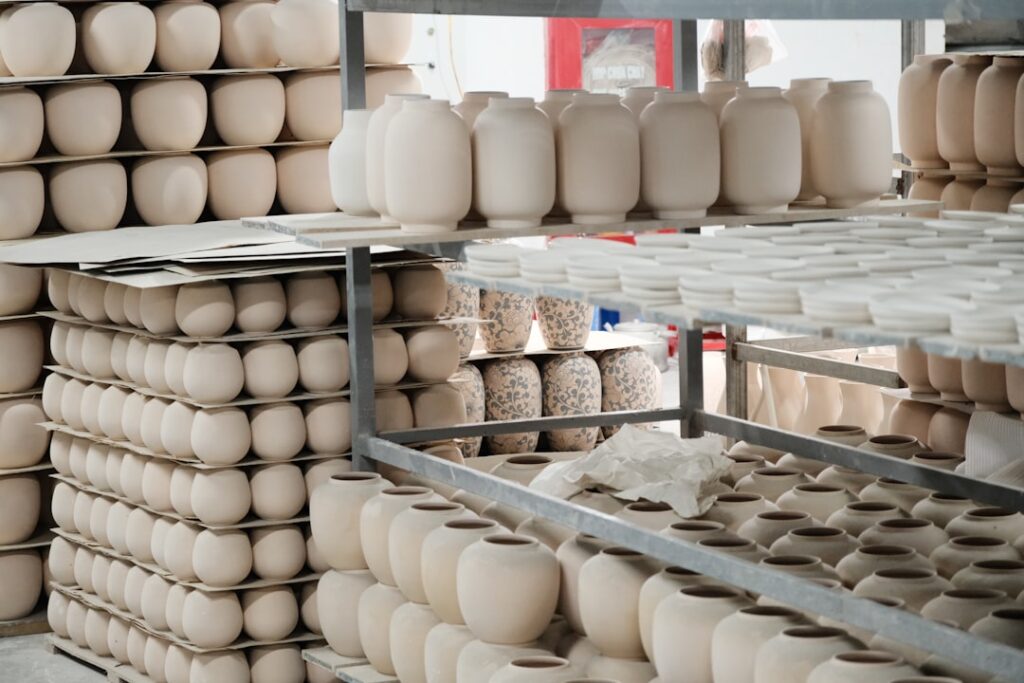
- How to recognize a handmade piece: look for irregularities: small variations in thickness, wheel marks, the potter’s signature on the base (often incised). Perfectly uniform pieces produced in large quantities are usually industrial.
- Prices: a small decorative plate can start at €25–40. Signature pieces or lamps can exceed €300–500. Expect to pay more for originality and high-quality glaze work.
- Haggling: acceptable for multiple purchases or low-value souvenirs, but respect the craft: avoid asking for excessive discounts in high season.
- Transport: for small items, use bubble wrap and a carry-on case if possible. For fragile, bulky pieces, request professional packing in a wooden crate (€25–120) and insured shipping. Many artisans offer this service with local partners.
- Customs and VAT: if you’re outside the EU and exporting pieces, find out about VAT refund procedures when leaving the European Union; keep your invoices and ask for the tax refund paperwork at purchase.
- Photography: always ask before photographing a working studio; some artisans prefer not to be disturbed during firings.
Finally, to support these trades, think about sharing the stories behind your purchases: where the piece came from, who made it, why the motif was chosen. Those stories add value to objects — and help workshops survive in a mass-production world.
Portraits of artisans: encounters and gestures
Nothing replaces meeting a potter in person. Here are three immersive portraits that capture the voices and gestures of local artisans, their workshops and working methods.
Marco Russo — the wheel and family memory (Amalfi)
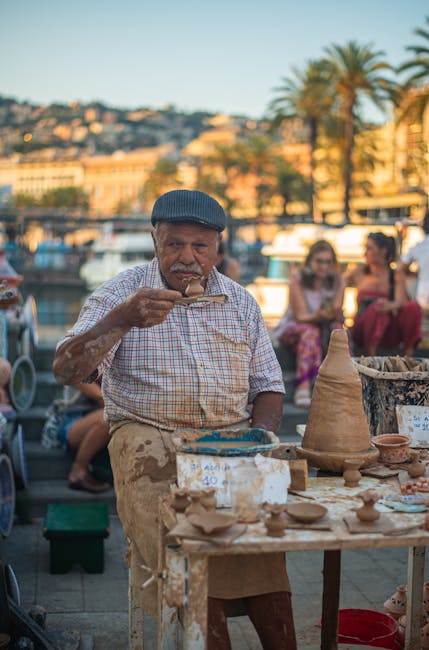
Marco speaks softly as a piece turns on the wheel. His hands, broad and stained with clay, seem to remember the motion: they press, lift, thin the rim. The son of a mason-turned-potter, Marco learned on the job, nourished by old tiles he salvaged from facades. His studio at Via Lorenzo D’Amalfi 12 is a sequence of spaces: the throwing area, a glazing corner, a small courtyard where panels dry in the sun. Marco values transparency in process: he shows local clay (a mix of chamotte and red earth), explains firing temperatures and lets you smell the glaze before firing — a metallic, mineral scent.
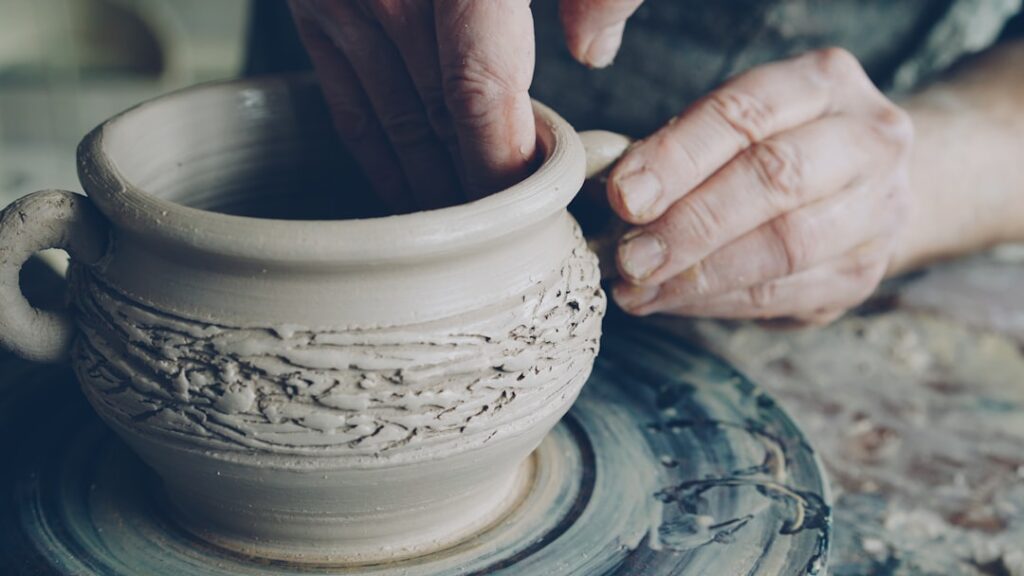
Marco’s tip: “Always feel the base of a piece to judge its balance. A good ceramic should sit comfortably in your hand, not crush it.” He also recommends avoiding overly thin pieces for daily use unless you have a repair kit: a knock on a thin rim can cause an irreparable crack. Marco accepts custom orders (repeated runs for sets of 12–24 plates); he prefers a deposit in cash or by bank transfer.
Antonella Ferraro — color as language (Atrani)
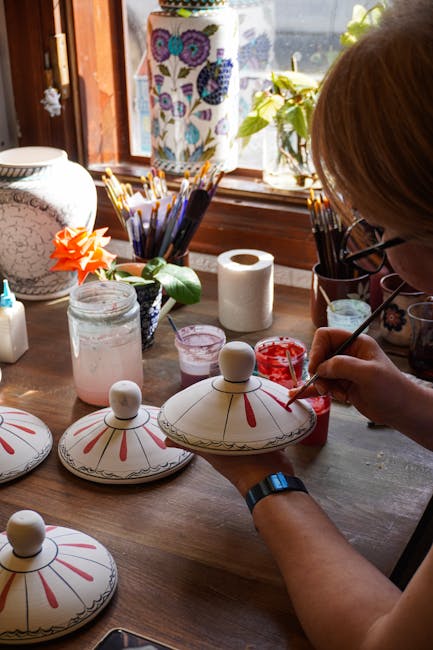
Antonella paints standing up, a fine brush in hand, leaning over a circular plate. Her motifs draw on marine and floral elements, but it’s her layers of glaze that impress: she overlays washes, scratches them back with a corner of cloth, then adds white highlights for light. Her studio at Via Umberto I 11 is small but organized: drawers of oxides, measuring spoons for pigments, test tiles. She describes her relationship to color: “Here the sea dictates a lot. Blue isn’t just blue — it’s the intensity of morning, the transparency of afternoon, the depth of evening.”
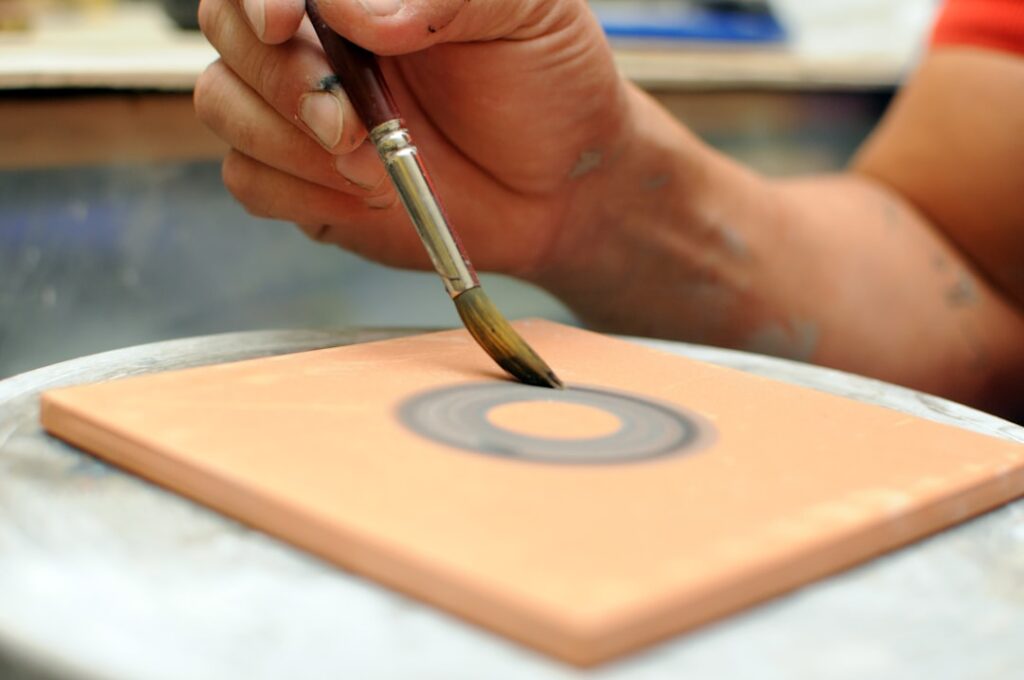
Antonella’s tip: if you want to reproduce a color you saw on site, take a photo in natural light (morning or late afternoon) and bring it when you place your order. Colors can shift during firing, so request a sample before committing to a series. For washable items, ask for a final glaze layer that’s food-safe.
Lucia Bianchi — design and light (Positano)
Lucia trained as a designer and works from Via Pasitea 204 in Positano. Her work is sculptural: perforated luminaires, asymmetrical-neck vases, bathroom basins. She experiments with matte glazes and shadow play; her lamps are designed to cast patterns across floors and walls when lit. In her studio-shop you’ll also find sketchbooks where she collects ideas and commissions. Lucia often collaborates with architects seeking one-off pieces for hotels and private homes.
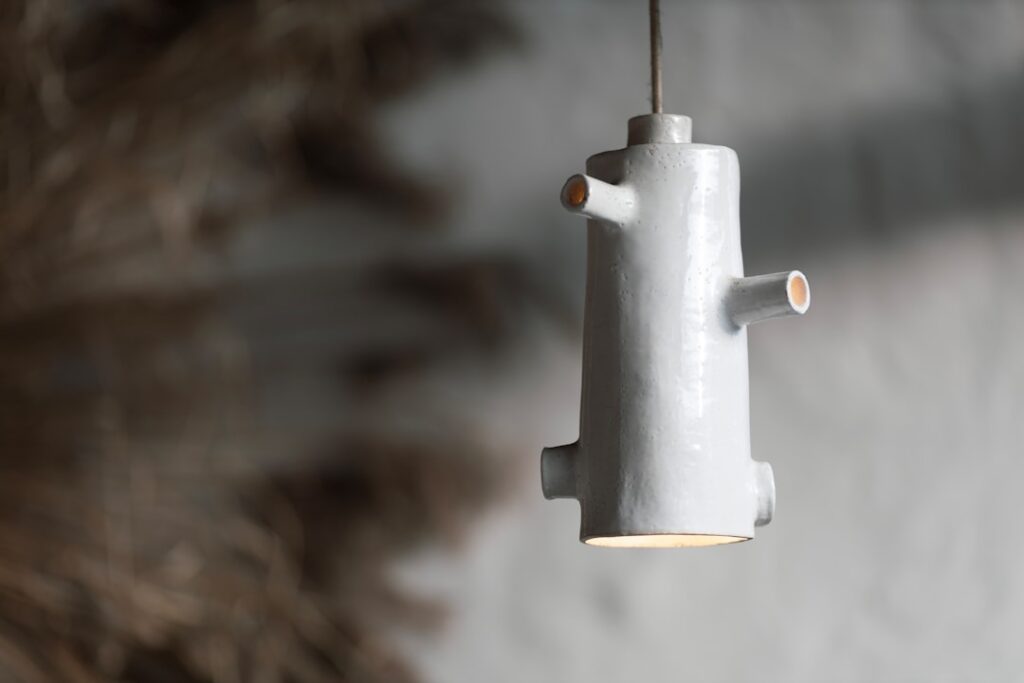
Lucia’s tip: for a lighting piece, always ask for a technical sheet (maximum wattage, recommended bulb type). Matte glazes need different care: avoid abrasive cleaners and use a damp cloth. If you’re buying for an interior project, bring a small fabric swatch or a photo of the room’s color palette so Lucia can match tones.
Conclusion: bringing a piece of the Amalfi Coast home — balancing caution and wonder
Amalfi Coast ceramics speak a language of their own. They tell stories of the sea, lemon groves, sunlight and centuries of cultural exchange; they communicate through color, form and gesture. Bringing a piece home isn’t just acquiring a decorative object — it’s keeping a tangible trace of a place, a craft and a shared moment with an artisan. To make that act sustainable and respectful, combine curiosity with care: observe the work, ask about materials, check glaze standards for food use, and arrange proper packing.
During your visits, remember the practical tips shared here: favor quiet hours, book workshops if you want to throw on the wheel, always ask about shipping terms and insurance for fragile pieces, and consider VAT refund procedures if you’re traveling from outside the EU. Supporting these artisans also means encouraging transmission: many studios now run kids’ courses and artist residencies — key tools to keep the craft alive. Buying local is joining that chain of transmission.
Finally, let beauty do its work: let your senses lead, touch surfaces, smell the clay, admire a glaze catching the sun. Whether you choose a painted plate from Vietri sul Mare, a sculpted lamp from Positano, or a wall panel from Ravello, every piece has a story — and every story starts with hands and glaze. Enjoy the coast, but above all, take the time to really look at the people who work the earth. They’ll tell you the story of their trade, and if you’re lucky, they might show you how to spin the wheel yourself.