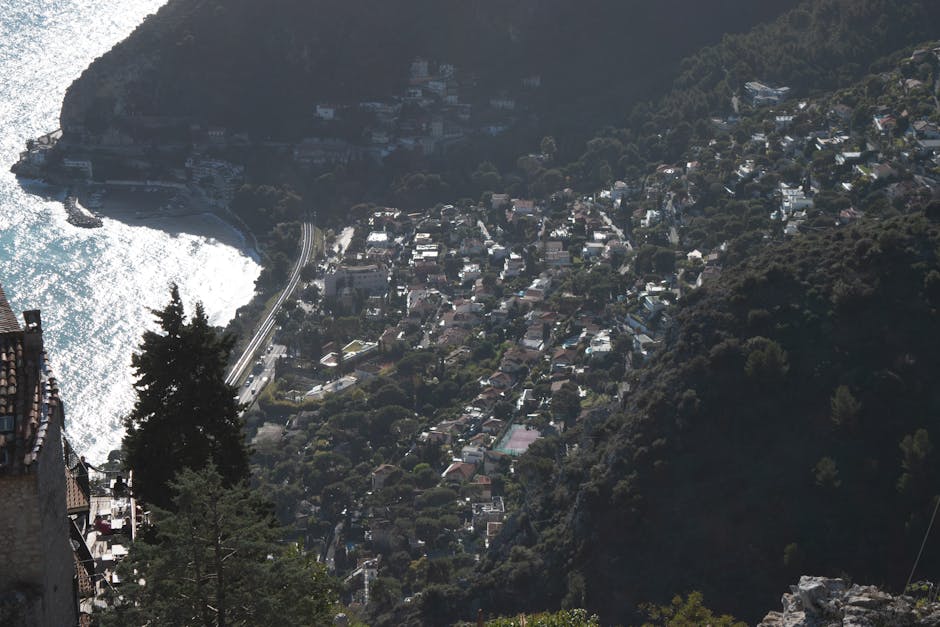






Introduction: Limited Edition — Where Contemporary Ceramics Meet the Amalfi Coast
The Amalfi Coast, with cliffs plunging into deep-blue seas, whitewashed villages and citrus gardens perfuming the air, has inspired makers and artists for centuries. One of the region’s most recognizable material expressions is ceramics — hand-painted plates, decorative tiles, lemon-motif vases and contemporary sculptural pieces. In recent years a distinct movement has emerged: limited editions, where local and international ceramists produce small, numbered runs that fuse the area’s time-honored techniques with a modern aesthetic. These works become high-end souvenirs, collectors’ items and living examples of craftsmanship rooted in the cultural landscape of the Amalfi Coast.
This guide will walk you through how to find, evaluate and buy contemporary limited-edition ceramics inspired by Amalfi and neighboring towns: Vietri sul Mare, Amalfi, Ravello, Positano, Maiori and Atrani. We outline the brief but rich history of the local ceramic tradition, and present selected studios and shops with exact addresses, opening hours, price ranges in euros and practical buying tips. You’ll also find suggested itineraries for visiting studios, packaging and shipping advice to ensure your piece arrives home intact, and markers to help you recognize a true limited edition — numbering, certificates of authenticity, signatures or workshop stamps.
Buying a limited edition is more than a transaction: it’s an encounter — with a master potter in a studio overlooking the sea, a young maker reworking traditional motifs into bold geometric forms, or a restorer reviving antique glazes with contemporary pigments. Prices vary widely depending on the artist’s reputation, the complexity of the technique (earthenware/majolica, stoneware, porcelain), the edition size and the finish. In this guide we provide price ranges and concrete examples — for instance, a numbered plate from an edition of 20 might range from €120 to €650, while a limited-edition stoneware wall sculpture can exceed €2,000.
To help you make the most of the experience, we include visual prompts — photo suggestions to take on site — so you can document impressions and your collection. Whether you’re an established collector, an interior designer hunting for a statement piece, or a curious traveler looking for a unique memento, this guide will equip you to navigate this specialized market and shop smart and sustainably on the Amalfi Coast.
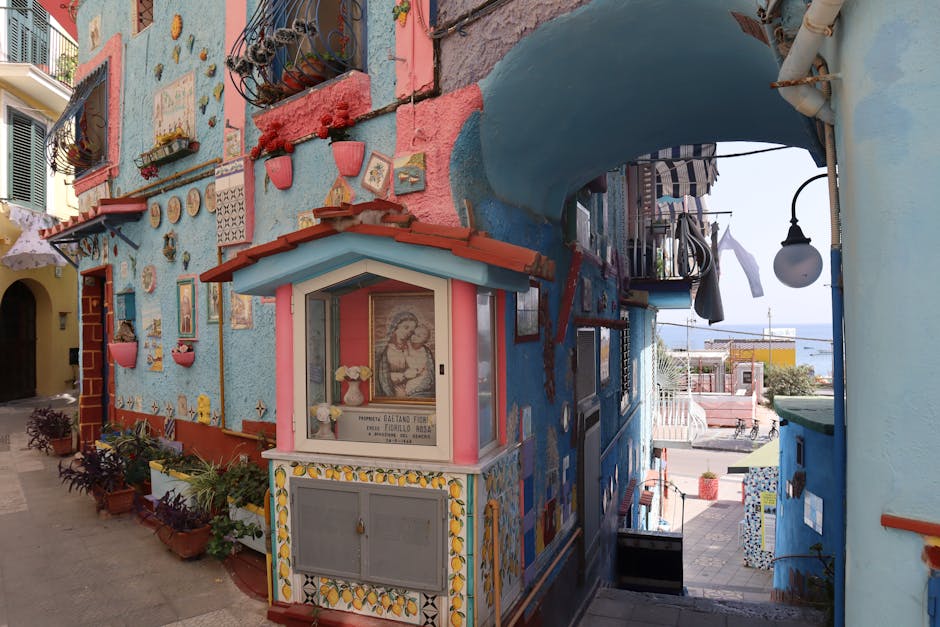
Historical and Artistic Context: Roots and Evolution Toward Limited Editions
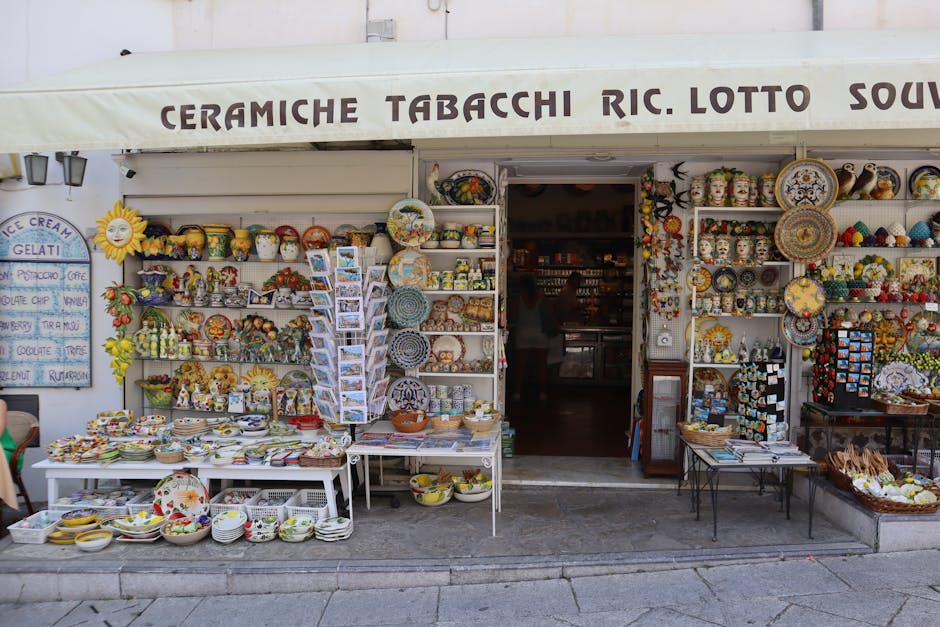
Ceramic production in Campania — especially in Vietri sul Mare and along the Amalfi Coast — springs from a long Mediterranean history blending Greek, Roman, Islamic and Italian Renaissance influences. The local majolica is traditionally known for its white bases, vibrant colors — lemon yellow, cobalt blue, emerald green — and floral or citrus motifs. This craft has been passed down through generations, often within family workshops tucked along alleys and the shoreline.
Since the late 20th century, and with the rise of luxury tourism, studios began to experiment: introducing modern forms, using matte glazes, exploring textures, firing at higher temperatures and combining materials (ceramics with metal or glass). These innovations led to the rise of limited editions, where a creator intentionally produces a small number of pieces — 5, 10, 20 — typically with numbering, a certificate of authenticity and a signature. This approach helps preserve both artistic and commercial value while celebrating the uniqueness of each run.
Technically, limited editions on the Amalfi Coast can combine several techniques:
- Decorative majolica: glazes fired over a white body, hand-painted motifs. Ideal for plates and decorative tiles.
- Contemporary stoneware: robust textures, organic shapes, matte finishes and earthy pigments.
- Fine porcelain: usually reserved for small runs due to cost and technical demands, often used for sculptural vases.
- Relief decoration and press-molds: using molds to create limited runs that are then hand-finished.
Aesthetically, contemporary Amalfi Coast artists reinterpret local elements: citrus motifs (Sorrento and Amalfi lemons), stylized waves, tile roofs, shuttered windows and cliff silhouettes. Others move toward total abstraction — monochrome surfaces punctuated by crackled glazes or metal inlays. Growing environmental awareness has also encouraged the use of low-impact glazes and energy-efficient firing techniques.
Why has the limited-edition model become important? It creates a sustainable economy around creation: artisans can fund technical research and training, invest in modern kilns and, crucially, secure fair compensation by limiting mass reproduction. For buyers, it guarantees exclusivity and traceability: a numbered, signed piece tells a story — a convergence of place, material and maker’s hand.
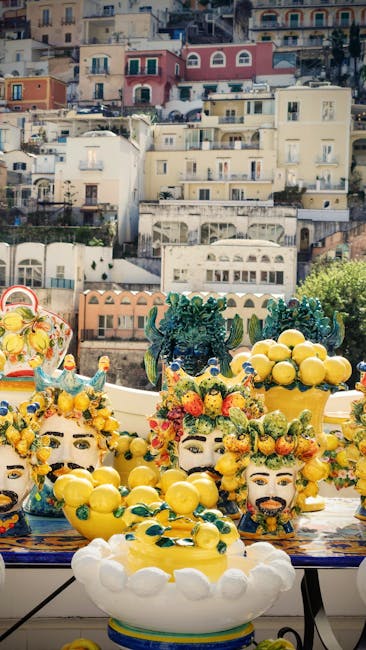
Where to Buy: Selected Studios, Shops and Galleries with Addresses, Prices and Opening Hours
Here’s a practical selection of studios and shops along the Amalfi Coast where you can find limited editions. Each listing provides a full address, typical price ranges and usual opening hours. Hours can vary by season; call ahead before you go.
-
Ceramiche Solimene — Workshop & Showroom
Address: Via Lungomare Marconi, 8, 84019 Vietri sul Mare SA, Italia.
Hours: Monday–Saturday 09:30–13:00 & 16:00–19:30, closed Sunday (extended hours in high season).
Price guide: small limited-edition bowls €85–€180, numbered plates €120–€450, art vases €600–€2,400.
Description: a historic workshop known for restorations and signed series; contemporary pieces coexist with traditional reissues. Guided visits possible by appointment. -
La Bottega Vietrese — Ceramics & Design
Address: Via Roma, 22, 84019 Vietri sul Mare SA, Italia.
Hours: daily 10:00–20:00 in summer, 10:00–18:00 off-season.
Prices: limited-edition decorative tiles €45–€120 each, wall ensembles €400–€1,200.
Description: a compact shop featuring young designers; great for gifts and custom orders (lead time 4–8 weeks). -
Atelier Raffaele D’Amico
Address: Via Monsignor A. Chiesa, 5, 84011 Amalfi SA, Italia.
Hours: Tuesday–Saturday 10:00–13:00 & 15:30–19:00, closed Sunday and Monday.
Prices: small editions €150–€380, numbered limited series €420–€1,100.
Description: located in the heart of Amalfi, the workshop offers night firings by appointment and issues certificates for limited editions. -
Positano Contemporary Ceramics
Address: Via Pasitea, 143, 84017 Positano SA, Italia.
Hours: 09:30–13:00 & 16:30–20:00 (high season), closed Wednesdays off-season.
Prices: artist pieces and international collaborations €250–€3,000. Small signed runs €120–€480.
Description: a gallery-workshop blending contemporary design with local craft, often hosting openings and special editions in collaboration with foreign designers. -
La Ceramica di Ravello
Address: Via Roma, 1, 84010 Ravello SA, Italia (near Villa Rufolo).
Hours: 10:00–13:00 & 15:30–19:00, closed Mondays.
Prices: artistic tiles €70–€200, sculptural porcelain pieces €400–€1,800.
Description: ideal for finding pieces for interior decoration, often inspired by Ravello’s gardens. -
Atelier Donato — Maiori
Address: Corso Reginna, 172, 84081 Maiori SA, Italia.
Hours: 09:00–13:00 & 15:00–19:00, open daily in July/August.
Prices: limited utilitarian series €60–€240, exhibition pieces €500–€1,500.
Description: a family workshop renowned for hand-painted plates featuring lemon-tree and nautical motifs.
Practical tip: for very limited editions (edition ≤ 10) or pieces by recognized artists, expect production lead times and special purchase conditions: reservation deposits (20–50%), certificates of authenticity and sometimes full payment on order. Always ask whether the price includes export packing and VAT (IVA): shops may offer tax-free options for non-EU residents.
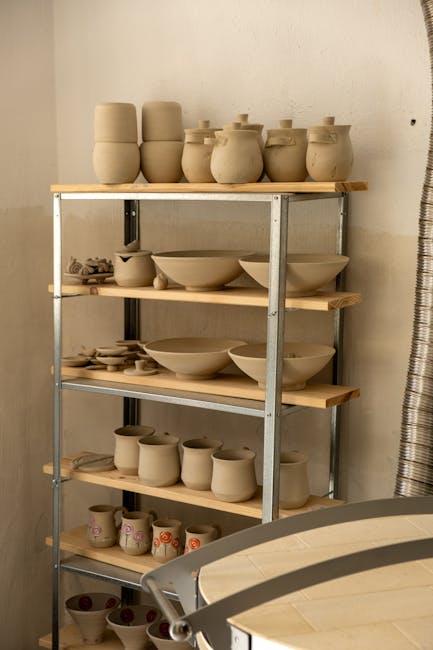
Studio Visits and Recommended Routes: Half-Day to Two-Day Itineraries
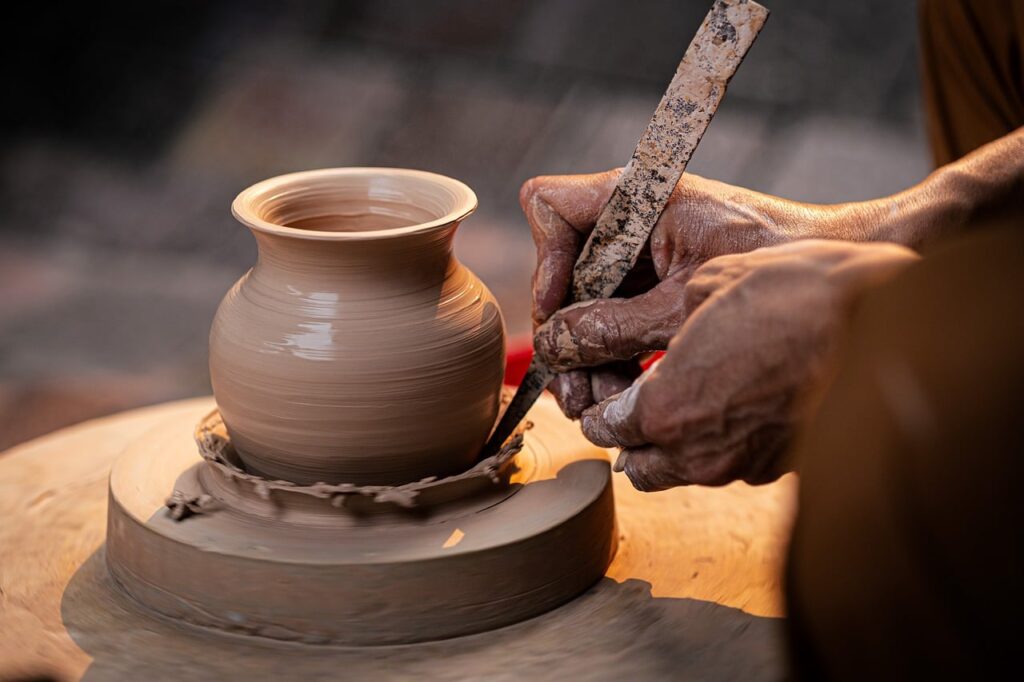
Visiting studios on the Amalfi Coast is an immersive experience: the smell of damp clay, kiln levers, flashes of glaze and the artisans’ explanations of technique. Here are several recommended routes depending on your time and interests.
-
Express route (half-day) — Vietri sul Mare & Amalfi
Start: Vietri sul Mare (Ceramiche Solimene, Via Lungomare Marconi, 8). Recommended time: 1.5–2 hours for visiting and shopping.
Then: cross to Amalfi (10–15 minutes by car) for Atelier Raffaele D’Amico (Via Monsignor A. Chiesa, 5). Recommended time: 1 hour.
Perks: perfect for scouting pieces and comparing styles. Book a morning guided visit to avoid crowds. -
One-day route — Positano, Praiano and Ravello
Start: Positano (Positano Contemporary Ceramics, Via Pasitea, 143). Stroll, then head to Praiano for independent studios (numerous small shops along the road). Finish the day in Ravello (La Ceramica di Ravello, Via Roma, 1) for a sunset visit.
Perks: a wide range of approaches — from contemporary design to classic figuration. -
Collector-focused route (2 days) — technical immersion
Day 1: Vietri sul Mare in the morning (Solimene + La Bottega Vietrese); Amalfi in the afternoon (Atelier D’Amico). Overnight in Amalfi or Ravello.
Day 2: private visits in Maiori (Atelier Donato, Corso Reginna, 172), scheduled meetings with a restorer and a gallery owner to discuss limited editions. Book in advance and budget for tasting and extended conversations (private sessions may cost €80–€200 depending on the studio).
Perks: opportunity to commission special editions or join a decorating session (masterclass) — typical masterclass cost €60–€150 per person.
Bookings and logistics: for studio visits, call or email 2–4 weeks ahead, especially in high season (June–September). If you want to attend a firing or a demo, plan for evening times: some firings start after 20:00 and go on late.
Another tip: pair a studio visit with a local sensory experience — lunch in a trattoria that serves on majolica (e.g., Ristorante Marina Grande, Via Marina Grande, 12, 84010 Amalfi SA — check whether they use local ceramics), or a walk through Amalfi and Vietri craft markets where you can sometimes meet the makers themselves.
Practical Advice for Buying, Shipping and Investing
Purchasing a limited edition takes preparation. Here are concrete recommendations to ensure a smooth acquisition — from negotiation to export and conservation.
-
Check provenance and numbering
A limited edition should ideally come with a certificate (artist name, edition size, serial number, year) and bear the artist’s signature or workshop stamp. Example: “Raffaele D’Amico — Ed. 7/20 — Amalfi 2026”. -
Negotiation and payment
Prices for limited editions are often fixed, but you can haggle on packing fees or ask for a discount when buying multiple pieces. Payment methods: cash (EUR), credit cards (Visa/MasterCard), bank transfers. For items over €1,000, a 20–50% deposit is common. -
Packing and insurance
Request professional export packing: bubble wrap, wooden crates if necessary, internal cushioning and sturdy outer packaging. Export packing prices: €15–€80 depending on size. For shipments, ask for transit insurance (1–3% of declared value). Partner shops often ship via international couriers (DHL, UPS, Poste Italiane). -
Customs and VAT
For non-EU residents, tax-free shopping may apply above a threshold — ask in-store. If you ship an item from Italy to another country, check customs formalities and import taxes for your country of residence. -
Care and restoration
Glazed ceramics should be hand-washed with a soft cloth and mild soap. Avoid thermal shocks (do not use in ovens unless specified). For valuable pieces, request a care sheet from the studio; some offer follow-up restoration or refurbishing services. -
Investment and resale
A limited edition by an emerging artist can appreciate if the maker gains recognition. Keep the certificate and invoice. For resale, specialized ceramic galleries or Italian auction houses (e.g., local sales in Salerno) may be appropriate channels.
One final local tip: take the time to talk. Artisans appreciate curious buyers who listen to the story and the technique. A polite phrase in Italian (thank you, grazie; please, per favore) and a sincere compliment about a piece can open doors — invitations to visit a kiln, discounts on packing or a sneak peek at a new collection.
Conclusion: Bringing the Soul of the Amalfi Coast Home in a Limited Edition
Buying a contemporary limited-edition ceramic on the Amalfi Coast isn’t just acquiring an object: it’s bringing home a fragment of history, a living craft, a dialogue between sea, citrus, light and the artisan’s hand. Numbered pieces reflect a desire to preserve uniqueness against mass production and give the buyer the responsibility and pleasure of caring for and passing on a utilitarian or decorative work of art.
This guide offered practical markers: studios to visit, full addresses, price ranges in euros, usual opening hours and advice for organizing purchases and shipments. Whether you pick a majestic signed porcelain vase, the warmth of a hand-painted lemon plate, or the modern feel of a stoneware piece with matte glazes, prioritize traceability (certificate and signature), secure packing and clear communication with the studio. Human encounters — a conversation with a master potter in Vietri sul Mare, a demonstration in Amalfi, an opening in Positano — enrich the object and increase its emotional value.
And don’t forget to enjoy the journey: wander the lanes, breathe in the lemon trees, photograph motifs on walls, taste local food served on traditional majolica — all contexts that make a ceramic resonate far beyond its material. If you’re building a collection or considering an investment, document each piece (photos, certificates, invoices), consider insurance and keep the studio’s information. Those simple steps will protect the value and story of your acquisitions.
On the Amalfi Coast, limited-edition ceramics are a living art. With this guide, you’ll be equipped to spot quality, negotiate wisely, transport safely and — most importantly — bring home a piece that tells a story: yours, tied to that land and its makers.